



What is mycelium? The part of a mushroom you do not see
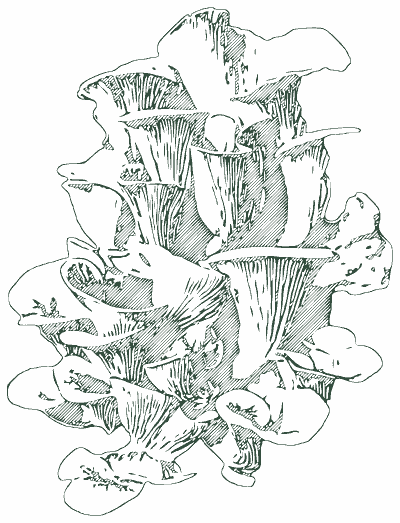
Mycelium is the living body of a fungus: a mass of fine threads that grows through the material it feeds on. A mushroom is the part that mycelium sends up to make and release spores. Utah State University Extension compares the two to an apple and the tree it grows on.1
Threads, not roots
Each of those fine threads is called a hypha, and together the hyphae make up the mycelium.1 Mycelium is often described as root-like, but it is the main body of the fungus, not a root of something else.
Fungi do not swallow their food the way animals do. The hyphae grow into the material around them, such as fallen wood, straw, leaves or other plant matter, and release enzymes and acids that break it down into nutrients the threads can then absorb.1 That is why mushroom growers give mycelium something woody or fibrous to grow through.
From mycelium to mushroom
When conditions are right, the mycelium gathers into small knots that grow into baby mushrooms.1 Growers call them pinheads. A slight drop in temperature and more fresh air, moisture and light all signal a fungus to start fruiting.1
Fresh air matters a great deal for oyster mushrooms. A training manual from an ICAR Krishi Vigyan Kendra notes that oyster mushrooms tolerate a lot of carbon dioxide while the mycelium is growing through the bag, but need good ventilation once they begin to fruit.3 The mushrooms then grow and open, and in time they release spores, each able to start new mycelium.1
Mycelium on our farm
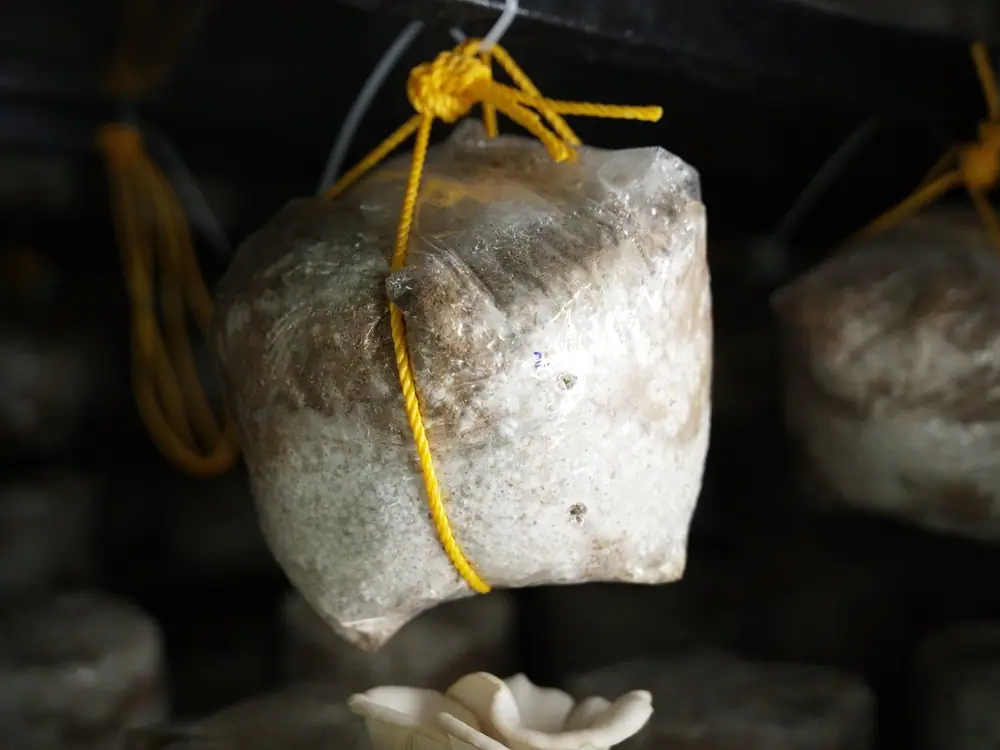
Growers start with spawn: mycelium grown on a carrier, usually grain.2,3 We buy our spawn from a spawn supplier in Tamil Nadu and mix it into soaked wood pellets, in grow bags we make on the farm.
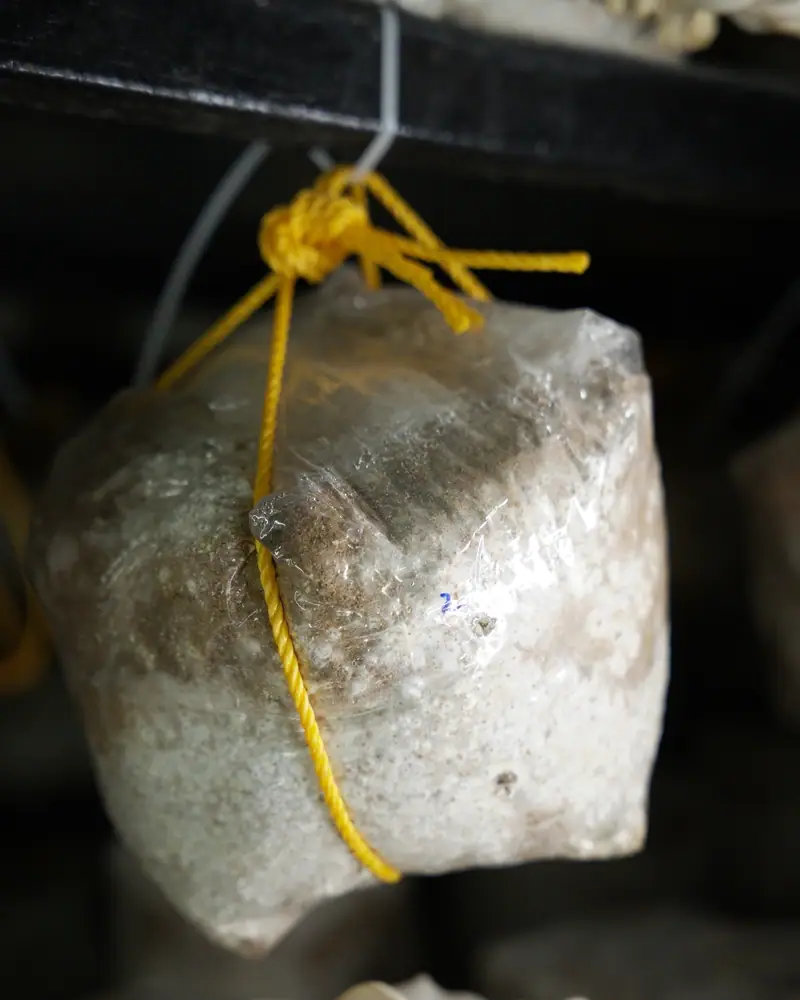
Over the following weeks the white mycelium grows through the bag. When it has filled the bag, pinheads form, and the humidifiers are switched on.
Read on
Sources
- “A Beginners Guide to Growing Mushrooms at Home”. Utah State University Extension. extension.usu.edu. Read on 30 October 2026.
- “Preparation of mother spawn”, Farm Enterprises: Mushroom. Tamil Nadu Agricultural University. Tamil Nadu Agricultural University website. Read on 30 October 2026.
- “Training Manual on Cultivation of Oyster Mushroom”, edited by Ereneus K Marbaniang. Krishi Vigyan Kendra West Khasi Hills, ICAR-ATARI Zone VII. kvkwestkhasihills.nic.in. Read on 30 October 2026.